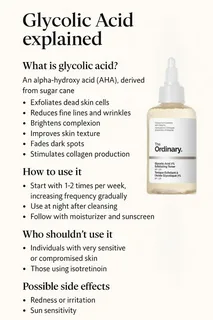
Exfoliation gets a lot of airtime in skincare conversations, and glycolic acid sits near the top of that discussion for good reason. The toner format makes it easy to bring into a routine — no mixing, no special technique, just one step on clean skin.
What the Acid Actually Does
Glycolic acid is an AHA derived from sugarcane, and it works on the surface layer of skin. It breaks down the bonds holding dead skin cells in place, allowing them to shed more easily. Over time, this reveals a clearer, more even surface, since newer skin underneath is no longer sitting under a buildup of older cells.
It also has a smaller molecular size than most other AHAs, which lets it penetrate the skin more readily — making it effective even at lower concentrations. If you’re new to acids, it’s worth introducing gradually rather than diving straight into daily use.
What Regular Use Produces
The results aren’t immediate. Most people start noticing smoother texture and a more even tone after three to four weeks of consistent use, with pore congestion typically improving over a similar timeframe. Fading of post-acne marks and mild pigmentation takes a bit longer — usually six to eight weeks — but it does happen with continued use.
Regular use can also improve how the rest of your routine performs. With less dead skin buildup on the surface, serums and moisturizers applied afterward absorb more effectively instead of sitting on top of old cells.
Getting the Application Right
Start with clean, dry skin — damp skin dilutes the acid and changes how it works. Using a cotton pad or clean fingertips (depending on the product’s instructions), sweep it across the face while avoiding the eye area and lips, then let it fully absorb before applying anything else. That absorption step matters more than most people realize.
Frequency matters just as much as technique. Two to three times a week is a sensible starting point, and daily use can follow once your skin has adjusted over several weeks. Moving to daily use too quickly is the most common reason people find the acid irritating and give up on it altogether.
One rule with no exceptions: if you’re using glycolic acid in the morning, sunscreen afterward is non-negotiable. AHAs temporarily thin the outer layer of skin, which increases sensitivity to UV exposure. Many people find it simpler to just use the toner in the evening and sidestep the sunscreen question entirely.
Matching It to Your Skin Type
For oily and combination skin, glycolic acid is particularly effective for pore clearing, reducing congestion, and keeping the surface smooth between deeper treatments. Dry skin can benefit too, but needs a richer moisturizer applied right afterward. Sensitive skin should stick to concentrations under 5% and use it less frequently, not more.
If you’re dealing with active breakouts or rosacea, it’s worth moving slowly and checking with a dermatologist before adding a glycolic acid toner to your regular routine.
This article is for general information and isn’t a substitute for advice from a dermatologist, especially if you have a skin condition or are unsure what’s right for your skin.
Leave a Reply