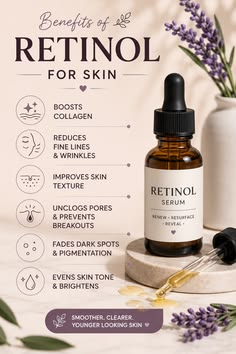
Vitamin A derivatives have decades of clinical research behind them, and retinol is the version most accessible in over-the-counter skincare. The peeling and irritation that put many people off it early on are almost always a result of starting too aggressively, not a problem with the ingredient itself.
The Mechanism Behind It
Retinol converts to retinoic acid once it’s on the skin — that’s the active form, and it works by signaling skin cells to turn over faster than they naturally would. The outer layer refreshes more frequently, which gradually clears congestion, softens the appearance of fine lines, and reduces pigmentation as newer cells reach the surface.
The benefits extend well beyond just anti-aging. Acne, post-acne marks, enlarged pores, and dull texture all respond to the same cell-turnover mechanism.
What to Expect Over Time
Results build gradually. Smoother surface texture tends to be the first thing most people notice, usually around weeks three to four. Improvements in fine lines take closer to three months to become clearly visible, while pigmentation fading and deeper structural changes take six months or longer with consistent use.
For oily and acne-prone skin, benefits typically show up as fewer breakouts and less congestion over time. Rather than treating breakouts after they happen, retinol works by changing the underlying conditions that cause them to keep recurring.
Getting the Introduction Right
The key to introducing retinol without irritation is applying it to fully dry skin — not slightly damp skin after cleansing. Damp skin lets retinol absorb faster and more deeply, which sounds like it would help but actually increases irritation significantly for most beginners.
Start with once a week. If your skin is tolerating it well after two weeks, move up to twice a week, and build from there gradually. A pea-sized amount is enough for your whole face — using more doesn’t speed up results, it just increases irritation.
Retinol should be used in the evening, consistently. It breaks down under UV exposure, which is one practical reason for nighttime use. The other is that the photosensitivity it creates makes morning use riskier unless sunscreen is applied reliably afterward.
Matching It to Your Skin Type
Oily skin tends to have an easier time with retinol since it builds tolerance faster. Most people with oilier skin can move from twice a week to three or four times within a couple of months, and better sebum regulation is often one of the earlier visible benefits for this skin type.
Dry skin benefits too, but needs more barrier support — a heavier moisturizer applied right after, or “sandwiching” retinol between two layers of moisturizer, helps reduce early dryness. Sensitive skin should start at the lowest concentration available, typically 0.025%, just once a week.
Retinol isn’t well suited to skin with an actively compromised barrier or active eczema flares. In those cases, it’s better to wait until the skin has settled before introducing it.
This article is for general information and isn’t a substitute for advice from a dermatologist, especially if you have specific skin concerns or conditions.
Leave a Reply