Home › Style Edits › Ethnic Wear
How to Style a Royal Blue Chikankari Suit
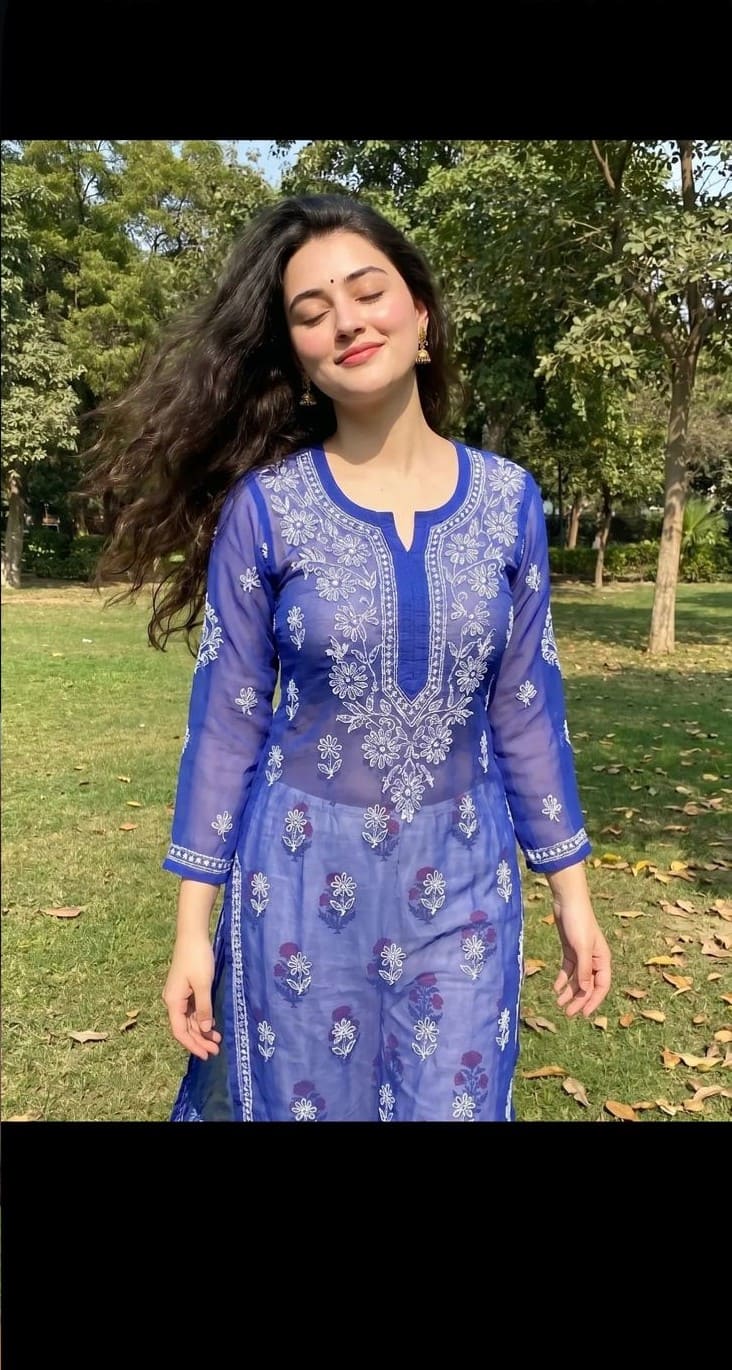
A deep cobalt suit with white thread-work that photographs beautifully in daylight — proof that one strong colour can carry a whole look.
★★★★½ Approx. ₹2,200
Style Score is our editorial take on the look — a styling opinion, not a product test. Prices are rough guidance for this kind of garment, not quoted retail.
Why this look works
The colour is doing the heavy lifting here, and it's a smart choice. A deep, slightly violet cobalt reads richer than the flat blues you see on a lot of suits, and it shifts a shade lighter outdoors — which is exactly why it works for a daytime function or an outdoor shoot. Royal blue also sits in that rare band of colours that flatters warm, neutral and deep Indian skin tones alike, because it has enough saturation to hold its own against golden undertones without washing anyone out.
White thread chikankari runs down the yoke, sleeves and front panels. Worn against a saturated base like this, white embroidery is at its most legible — it keeps the look graphic and uncluttered rather than busy. If you're recreating the vibe, that high-contrast pairing is the single biggest takeaway: pale thread-work on a deep ground will always read cleaner than tone-on-tone from across a room.
The fabric and silhouette
A fine cotton-georgette base gives the kurta a soft A-line fall and keeps it breathable, so the silhouette stays relaxed instead of stiff. Knee length is the sweet spot for versatility — long enough to feel occasion-ready, short enough to move between the office and a daytime do without a change. Straight-cut palazzos or a churidar both work underneath; the palazzo keeps the line modern, the churidar leans classic.
If you're buying something similar, hold the fabric up to the light before you pay. Genuine hand chikankari shows tiny irregularities between motifs and slightly raised knots on the reverse — a printed imitation is perfectly flat and perfectly uniform. We walk through the full tell-them-apart checklist in our chikankari buying guide.
Style it with
- Jewellery: silver oxidised jhumkas and a small bindi, and stop there — a piece this bold doesn't need competing accessories. Gold jewellery fights the cool blue; silver and oxidised finishes belong with it.
- Dupatta: a light white or offwhite dupatta keeps the palette graphic. Fine fabrics tend to slip, so a discreet saree pin at the shoulder keeps the drape where you want it.
- Footwear: flat kolhapuris or low block heels in tan or silver. Pointed white flats work if you want a more contemporary finish.
- Bag: a small potli or a structured white sling — anything larger starts to compete with the embroidery.
Who it suits and where to wear it
This is a forgiving silhouette: the A-line fall skims rather than clings, so it flatters most body types, and the deep colour is kind under harsh afternoon light. It's the outfit we'd reach for when the invitation says "daytime function" and nothing else — a pooja, a mehndi brunch, an office festive day, a family lunch where you want to look dressed without being the most dressed person in the room. For evening events, the same suit steps up with a metallic clutch and a darker lip.
Get the look on a budget
A machine-embroidered cotton version of this look typically sits around ₹1,200–₹1,800 online, while genuine hand-embroidered Lucknowi pieces start closer to ₹2,500 and climb with the density of the work. If the budget is tight, prioritise the colour and the cut over authentic hand-work — the cobalt-plus-white contrast is what makes the look, and a good machine-embroidered piece photographs almost identically. Just don't pay hand-work prices for machine work; the buying guide shows you how to tell the difference in under a minute.
Care notes
Hand-embroidered cotton like this is happiest on a cold gentle wash and a shaded line-dry; that protects both the dye and the thread-work over time. Iron inside-out on medium, working around the embroidery rather than over it, and store it folded with the embroidered side inward so the threads don't snag. More on looking after delicate pieces in our fabric care guide.
More looks like this
Ivory cotton with pink thread chikankari across the yoke — the piece we'd point chikankari first-timers to.
Baby-pink ground, block-print motifs and a scalloped border — festive-soft rather than festive-heavy.
Deep wine satin with a tone-on-tone gold border — our pick for cocktail-evening energy without the bling.
Browse all our ethnic wear edits, or see which colours flatter Indian skin tones before your next buy.